Non-intrusive surveys
Non-intrusive surveys are an effective way to assess shallow-buried UXO risk on sites with suitable ground conditions, particularly relatively clean greenfield sites. Depending on the site, we use manual walkover, vehicle-mounted or aerial (drone) magnetometer systems. In suitable ground, a magnetometry survey can detect a buried 50 kg German aerial bomb to around 3 m below ground level.
Detection depends on ground conditions and magnetic interference, and non-intrusive surveys are not suitable for clearance ahead of deep intrusive works such as piling or drilling.
Intrusive surveys
Where deeper ground penetration is needed, typically beyond 3 to 4 m below ground level, intrusive magnetometer techniques give detection directly ahead of specific works, such as pile positions. They work at depths beyond the reach of non-intrusive surveys and in areas with heavy surface ferrous contamination, making them a practical approach on complex or brownfield sites.
UXO search and clear
A systematic search and clearance of the working area to the assessed UXO risk depth, with every find identified, recorded and dealt with safely. The works are recorded in a finds register and item-by-item risk assessments, and completed with an ALARP certificate and final report for the project Health and Safety File.
UXO disposal
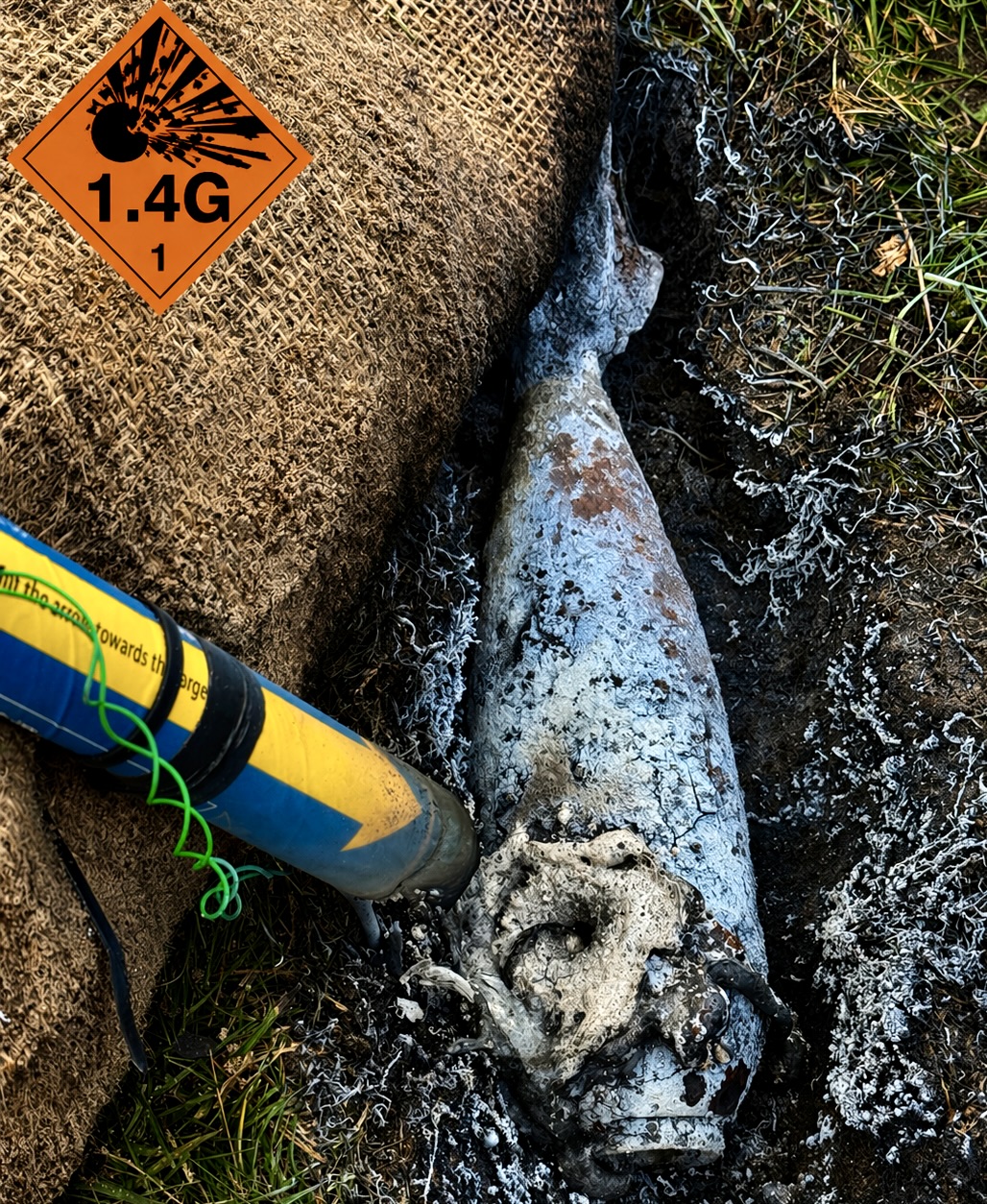
We identify, classify and risk assess historic ordnance found across the UK. We are licensed to transport and handle Class 1 explosives and operate in full compliance with ADR and the Explosives Regulations 2014. After an item-specific hazard assessment we can remove items off site or use suitable disposal techniques, including low-order methods. Where an item poses an immediate risk, we coordinate directly with the Police and military Explosive Ordnance Disposal (EOD) units.